Rydoo pricing Guide (2026): Plans, Costs & Value
Executive Summary: Rydoo pricing
Understanding Rydoo pricing structure is crucial for businesses evaluating expense management solutions. Rydoo operates on a per-user, per-month model without publicly listed prices, requiring custom quotes from their sales team.
Compared to competitors like Expensify and SAP Concur, Rydoo sits in the mid-to-premium range. Industry estimates suggest pricing starts around $8-12 per user monthly for basic plans. However, enterprise features and integrations can push costs significantly higher.
Plan Overview
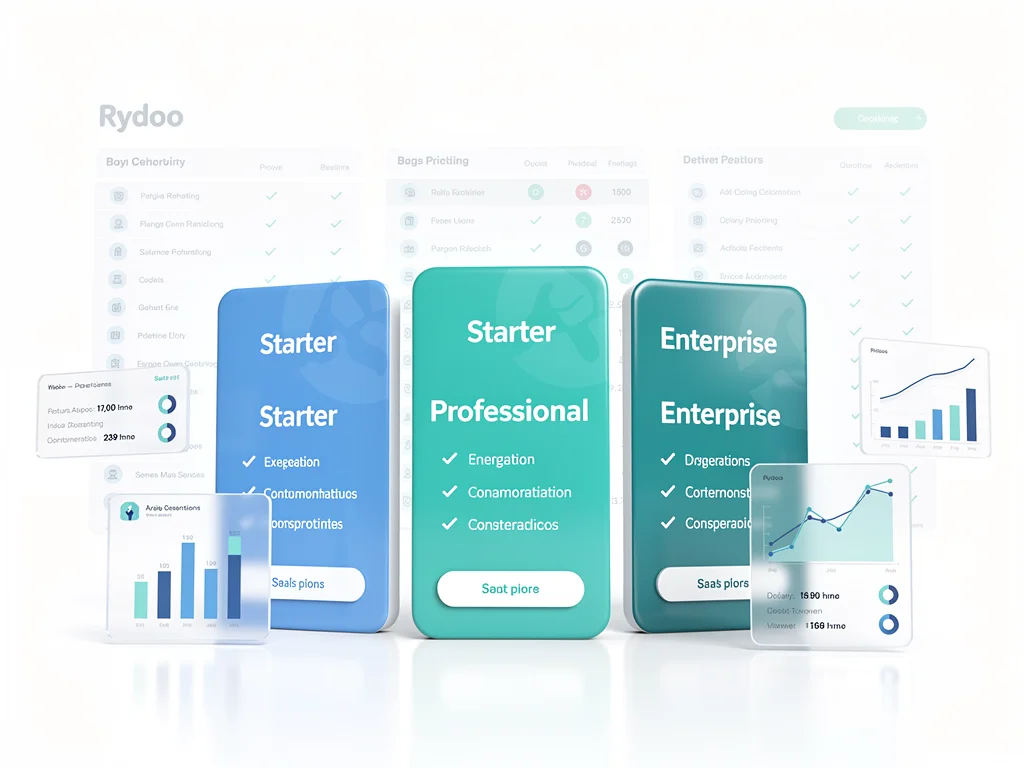
| Plan | Estimated Price | Best For | Key Features |
|---|---|---|---|
| Essential | $8-12/user/month | Small teams | Basic expense tracking, mobile app, OCR scanning |
| Professional | $12-18/user/month | Growing businesses | Advanced workflows, integrations, multi-currency |
| Enterprise | Contact Sales | Large organizations | Custom integrations, dedicated support, SLA |
Free Plan Details
No free tier available. Rydoo does not offer a permanently free plan for ongoing use. Consequently, businesses must commit to a paid subscription after the trial period ends. Additionally, there’s no freemium option for limited users or features.
Paid Plans Deep Dive
Essential Plan ($8-12/user/month estimated)
The Essential plan targets small businesses with straightforward expense needs. Key features include:
- Mobile receipt scanning with OCR technology
- Automated expense categorization
- Basic approval workflows
- Standard integrations with accounting software
- Email support
This tier strictly suits teams under 50 employees with simple approval hierarchies. However, customization options remain limited compared to higher tiers.
Professional Plan ($12-18/user/month estimated)
The Professional tier adds robust features for scaling organizations:
- Multi-level approval workflows
- Advanced reporting and analytics
- Multi-currency and multi-entity support
- Credit card reconciliation
- Priority support
- API access for custom integrations
This plan strictly targets mid-market companies (50-500 employees) requiring sophisticated policy enforcement. Additionally, it supports international operations with complex reporting needs.
Enterprise / Custom
Enterprise Rydoo pricing varies significantly based on specific requirements. Factors driving costs upward include:
- Custom ERP integrations (SAP, Oracle, NetSuite)
- Dedicated account management and onboarding
- Service Level Agreements (SLA) with guaranteed uptime
- White-labeling and branding customization
- Advanced security features and compliance certifications
- Volume discounts negotiated for 500+ users
Consequently, enterprise contracts typically require annual commitments. Implementation fees may range from $2,000-10,000 depending on complexity.
Is it worth the money?
Evaluating Rydoo pricing requires examining ROI potential. Finance teams typically spend 20-40 hours monthly on manual expense processing. Automation can reduce this by 70-80%, translating to substantial labor savings.
For a 100-person company spending $12/user monthly ($1,200), annual costs reach $14,400. However, recovering just 25 finance hours monthly at $50/hour saves $15,000 annually. Additionally, reduced errors and faster reimbursements improve employee satisfaction.
Value Verdict
Rydoo delivers strong value for mid-market and enterprise organizations with complex expense workflows. The platform excels at international operations and multi-entity management. However, small teams under 20 employees might find better value with simpler, cheaper alternatives like Expensify or Zoho Expense.
The lack of transparent pricing remains frustrating. Consequently, budget-conscious buyers should request detailed quotes early and negotiate volume discounts aggressively.
Frequently Asked Questions (FAQ)
1. Does Rydoo offer a free trial?
Yes, Rydoo typically provides a 14-day free trial. This allows teams to test core features before committing. However, trial length may vary based on company size and sales negotiations.
2. Are there any hidden setup fees?
Implementation fees aren’t publicly disclosed but are common in enterprise software. Expect $1,000-5,000 for standard setups. Additionally, complex integrations or data migration can add $5,000-15,000. Always request itemized quotes including onboarding costs.
3. Can I cancel my subscription anytime?
Cancellation terms depend on your contract. Monthly plans typically allow cancellation with 30 days notice. However, annual contracts usually require fulfilling the commitment period. Consequently, negotiate flexible terms during initial discussions.
Conclusion
Rydoo pricing follows industry-standard per-user models but lacks transparency with contact-only quotes. For organizations prioritizing robust features and international capabilities, the investment justifies itself through efficiency gains. Nevertheless, smaller teams should compare alternatives carefully before committing. Visit Rydoo’s official site for current offerings and request detailed pricing breakdowns. Read more at CloudKitly.