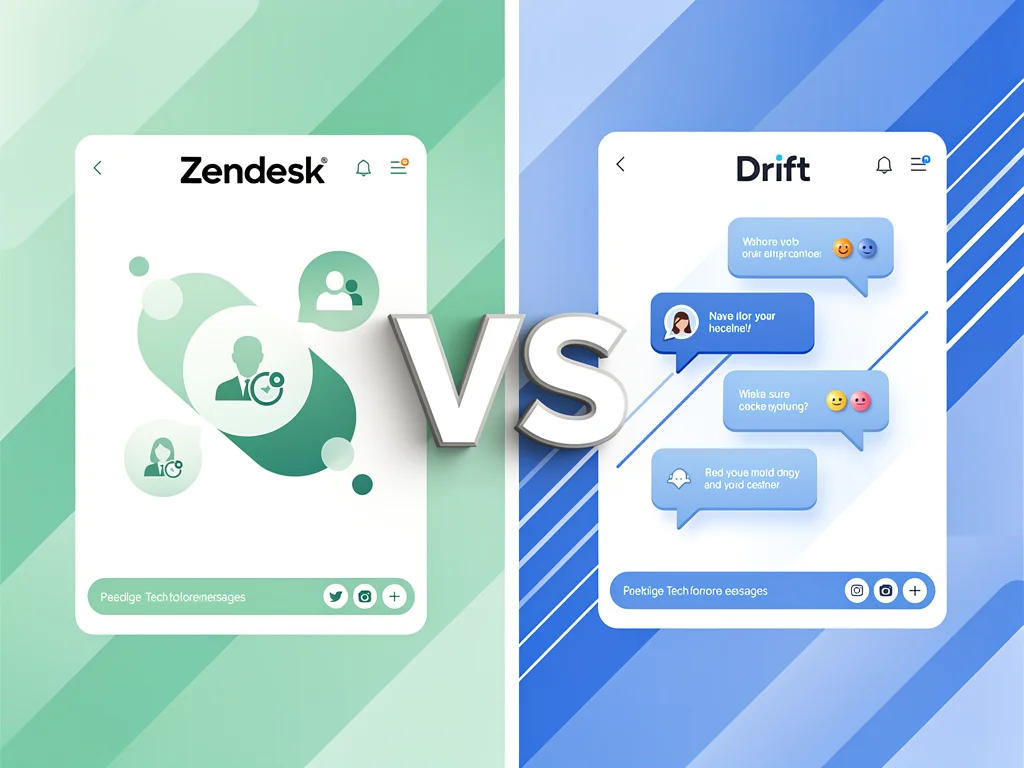
Zendesk vs Drift comparison (2026): Features, Costs & Verdict
Executive Summary
In this detailed Zendesk vs Drift comparison, we reveal which platform dominates customer engagement in 2026. Zendesk excels as a comprehensive support suite for enterprises managing high ticket volumes. Conversely, Drift wins for B2B sales teams prioritizing conversational marketing and real-time lead qualification.
Zendesk serves customer service teams needing omnichannel support across email, chat, phone, and social media. Drift targets revenue teams wanting AI-powered chatbots that book meetings and qualify leads instantly. Therefore, your choice depends on whether you prioritize support workflows or sales acceleration.
Comparison Table
| Feature | Zendesk | Drift |
|---|---|---|
| Primary Use Case | Customer support & ticketing | Conversational marketing & sales |
| Best For | Enterprises, support teams | B2B sales teams, marketers |
| Starting Price | $19/agent/month | $2,500/month (Premium) |
| Free Trial | 14 days | 14 days |
| AI Capabilities | AI-powered automation, intent detection | Conversational AI, lead routing |
| Integrations | 1,200+ apps | 50+ native integrations |
| Mobile App | Yes (iOS & Android) | Yes (iOS & Android) |
| Reporting | Advanced analytics, custom dashboards | Revenue attribution, conversation analytics |
Core Features: Zendesk
Zendesk delivers a robust ticketing system that consolidates customer inquiries from multiple channels. Support agents access unified inboxes showing email, chat, phone, and social media requests simultaneously. Moreover, the platform automates ticket routing based on agent skills, language, or workload.
Omnichannel Support Infrastructure
The platform supports live chat, messaging apps (WhatsApp, Facebook Messenger), and voice channels natively. Consequently, retail businesses manage ~40% more inquiries without hiring additional staff. The Answer Bot uses machine learning to suggest help articles, resolving 15-20% of tickets automatically.
Workflow Automation & Macros
Zendesk’s automation rules trigger actions based on ticket properties, time conditions, or customer data. For instance, SaaS companies create macros that apply tags, send templated responses, and escalate bugs to engineering teams. This saves support managers approximately 8 hours weekly on repetitive tasks.
Knowledge Base & Self-Service
The built-in Help Center lets organizations publish FAQs, tutorials, and community forums. Healthcare providers report 30% ticket deflection after implementing searchable knowledge bases. However, customization requires HTML/CSS knowledge for advanced branding.
Core Features: Drift
Drift pioneered conversational marketing by replacing static forms with real-time chat experiences. The platform qualifies website visitors instantly, routing high-intent prospects to sales reps while nurturing others via automated playbooks. Therefore, B2B companies shorten sales cycles by 25-40%.
Conversational AI & Chatbots
Drift’s AI chatbot asks qualifying questions, checks meeting availability, and books calendar slots without human intervention. Software vendors using this feature report 3x more demo bookings compared to traditional contact forms. The bot learns from past conversations, improving response accuracy over time.
Account-Based Marketing (ABM) Tools
The platform identifies target accounts visiting your site using Clearbit integration and Salesforce data. When VIP prospects arrive, personalized playbooks trigger, offering white-glove experiences. Marketing agencies see 50% higher engagement rates with ABM-targeted conversations versus generic greetings.
Revenue Attribution & Analytics
Drift tracks which conversations generate pipeline and closed deals. Sales leaders view metrics like conversation-to-meeting rate, response time, and revenue influenced. However, accurate attribution requires proper CRM integration and UTM parameter discipline across campaigns.
Price Comparison
Pricing structures at a glance:
- Zendesk: Suite Team ($55/agent/month), Suite Growth ($89/agent/month), Suite Professional ($115/agent/month). Enterprise pricing requires contacting sales. Annual billing offers 20% discounts.
- Drift: Premium starts at $2,500/month (flat fee), Advanced requires custom quotes. No per-seat pricing; costs scale with conversation volume and features needed.
Verdict on Pricing: Zendesk suits teams needing predictable per-agent costs. Drift’s flat-rate model benefits large sales teams but creates sticker shock for startups. Moreover, Drift’s implementation fees often add $5,000-$15,000 to initial costs.
Pros & Cons
Zendesk Pros & Cons
- Pro: Handles 1,200+ integrations including Salesforce, Slack, Jira, and Shopify seamlessly.
- Pro: Scales from 5-agent startups to 5,000-agent enterprises without platform migration.
- Pro: Advanced reporting shows CSAT scores, first response time, and resolution rates by channel.
- Con: Interface feels dated compared to newer support tools; customization requires developer resources.
- Con: Phone support costs extra ($19/user/month add-on), inflating total ownership costs.
Drift Pros & Cons
- Pro: AI qualifies leads 24/7, ensuring sales reps only engage high-intent prospects.
- Pro: Native Salesforce and HubSpot sync keeps CRM data accurate without manual entry.
- Pro: Playbooks automate complex conversation flows, reducing setup time to under 30 minutes.
- Con: Minimum $2,500/month pricing excludes small businesses and bootstrapped startups entirely.
- Con: Limited integration ecosystem (50+ apps) compared to Zendesk’s 1,200+ marketplace options.
Frequently Asked Questions (FAQ)
1. Which tool is better for small businesses?
Zendesk wins for small businesses. Its $19/agent/month entry plan fits tight budgets, whereas Drift’s $2,500 minimum excludes most startups. Consequently, companies under 20 employees should choose Zendesk Suite Team.
2. Does Zendesk offer better integration than Drift?
Yes. Zendesk provides 1,200+ integrations versus Drift’s 50+ native connections. Therefore, enterprises using niche tools like Gainsight or Intercom find Zendesk more flexible for complex tech stacks.
3. Is there a free version available?
Neither platform offers permanent free plans. However, both provide 14-day trials without requiring credit cards. Zendesk’s trial includes full Suite features; Drift’s trial limits conversation volume to 100 monthly chats.
Final Verdict: Winner Revealed
In this Zendesk vs Drift comparison, Zendesk wins for customer support teams managing high ticket volumes across multiple channels. Its $55/agent/month Suite Team plan delivers omnichannel support, automation, and analytics that scale efficiently. Conversely, Drift dominates for B2B sales organizations prioritizing lead qualification and meeting bookings. Companies generating $5M+ annual revenue justify Drift’s $2,500/month investment through accelerated pipeline growth. Check more reviews at CloudKitly.