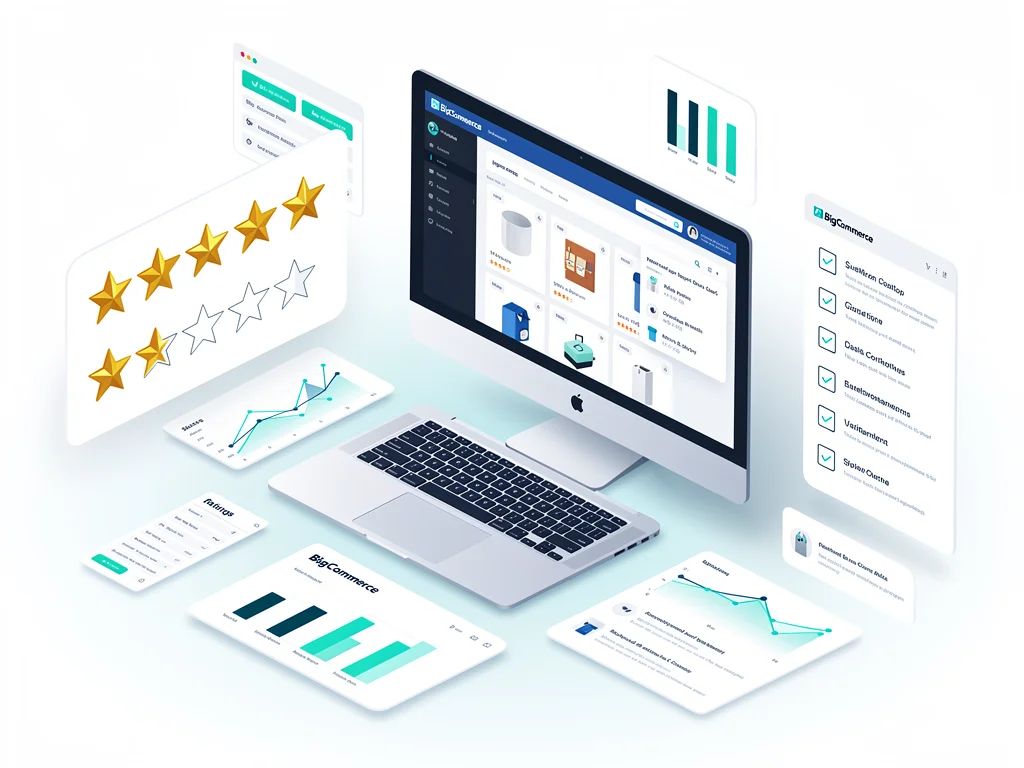
BigCommerce review (2026): Features, Pros & Cons Analyzed
Executive Summary: BigCommerce review
In this comprehensive BigCommerce review, we analyze one of the leading enterprise ecommerce platforms available today. BigCommerce delivers robust multi-channel selling, advanced SEO tools, and unlimited product catalogs without transaction fees.
Recommendation: Buy – BigCommerce suits growing businesses needing scalability. However, smaller stores may find pricing steep compared to alternatives. Therefore, evaluate your growth trajectory before committing.
Core Features
Multi-Channel Selling
BigCommerce integrates natively with Amazon, eBay, Facebook, Instagram, and Google Shopping. Moreover, it synchronizes inventory across all channels automatically. This eliminates overselling risks and reduces manual data entry significantly.
SEO Capabilities
The platform provides advanced SEO features including customizable URLs, microdata support, and automatic sitemap generation. Additionally, it offers built-in AMP support for mobile optimization. Therefore, stores rank competitively without requiring extensive technical knowledge.
Product Management
Users can create unlimited products, variants, and categories across all pricing tiers. The system handles complex product options with up to 250 SKU combinations per item. Furthermore, bulk editing tools streamline catalog management for large inventories.
Analytics and Reporting
Built-in analytics track revenue, conversion rates, and customer behavior without third-party tools. However, advanced segmentation requires integration with Google Analytics. Real-time dashboard updates provide actionable insights for data-driven decisions.
Payment Processing
BigCommerce supports over 65 payment gateways including PayPal, Stripe, and Square. Notably, it charges zero transaction fees regardless of your chosen processor. This saves growing businesses thousands annually compared to competitors.
Security and Compliance
All plans include Level 1 PCI compliance, SSL certificates, and automatic security updates. Moreover, the platform maintains 99.99% uptime based on third-party monitoring data. Therefore, businesses handle sensitive customer data with confidence.
Pros & Cons found in this BigCommerce review
Pros:
- No transaction fees on any plan saves significant revenue
- Unlimited products, file storage, and bandwidth across all tiers
- Native multi-channel integration reduces app dependency
- Advanced SEO tools outperform most competitors
- Robust API enables extensive customization for developers
Cons:
- Annual sales thresholds force plan upgrades or incur penalties
- Theme customization requires HTML/CSS knowledge for deep changes
- Abandoned cart saver only available on higher-tier plans
- Limited built-in email marketing compared to Shopify
- Steeper learning curve than beginner-friendly platforms
Pricing
Here is the breakdown of BigCommerce pricing plans for 2026:
| Plan | Price (Monthly) | Key Features & Limits |
|---|---|---|
| Free Plan | $0 | Not available – BigCommerce offers 15-day free trial only |
| Standard | $39 | Up to $50K annual sales, unlimited products, multi-channel selling, basic reporting |
| Plus | $105 | Up to $180K annual sales, customer segmentation, abandoned cart saver, persistent cart |
| Pro | $399 | Up to $400K annual sales, Google customer reviews, custom SSL, product filtering |
| Enterprise | Custom | Unlimited sales, priority support, custom faceted search, dedicated account manager, custom checkout |
Frequently Asked Questions (FAQ)
1. Is BigCommerce legit and safe to use?
Yes, BigCommerce is a publicly-traded company (NASDAQ: BIGC) serving over 60,000 merchants globally. It maintains Level 1 PCI DSS compliance and provides enterprise-grade security. Therefore, it handles payment data safely and meets international regulatory standards.
2. How good is their customer support?
Support quality varies by plan tier. Standard plans receive 24/7 phone, chat, and email support with average response times under 2 hours. However, Enterprise customers get dedicated account managers and priority escalation. Community forums provide additional peer-to-peer assistance.
3. Who is BigCommerce best suitable for?
BigCommerce suits mid-market retailers doing $100K-$5M annually who need multi-channel capabilities. It particularly benefits B2B wholesalers, manufacturers, and brands with complex catalogs. However, hobby sellers and startups may find better value with lower-cost alternatives.
Final Verdict
This BigCommerce review confirms it excels for growth-focused businesses requiring enterprise features without transaction fees. The platform handles technical complexity well but demands investment in learning or development resources. Therefore, choose BigCommerce if you prioritize scalability over simplicity. Conversely, absolute beginners should consider more intuitive options first. For detailed comparisons of ecommerce platforms and cloud solutions, explore more at CloudKitly. Visit BigCommerce directly to start your free trial.