
Gupshup pricing Guide (2026): Plans, Costs & Value
Executive Summary: Gupshup pricing
Understanding Gupshup pricing structure is crucial before committing to this conversational messaging platform. Gupshup operates on a consumption-based model, charging per message across channels like WhatsApp, SMS, and RCS.
Compared to competitors, Gupshup pricing sits in the mid-to-premium range. However, its extensive channel support and enterprise features justify costs for high-volume businesses. Small startups may find cheaper alternatives elsewhere.
Plan Overview
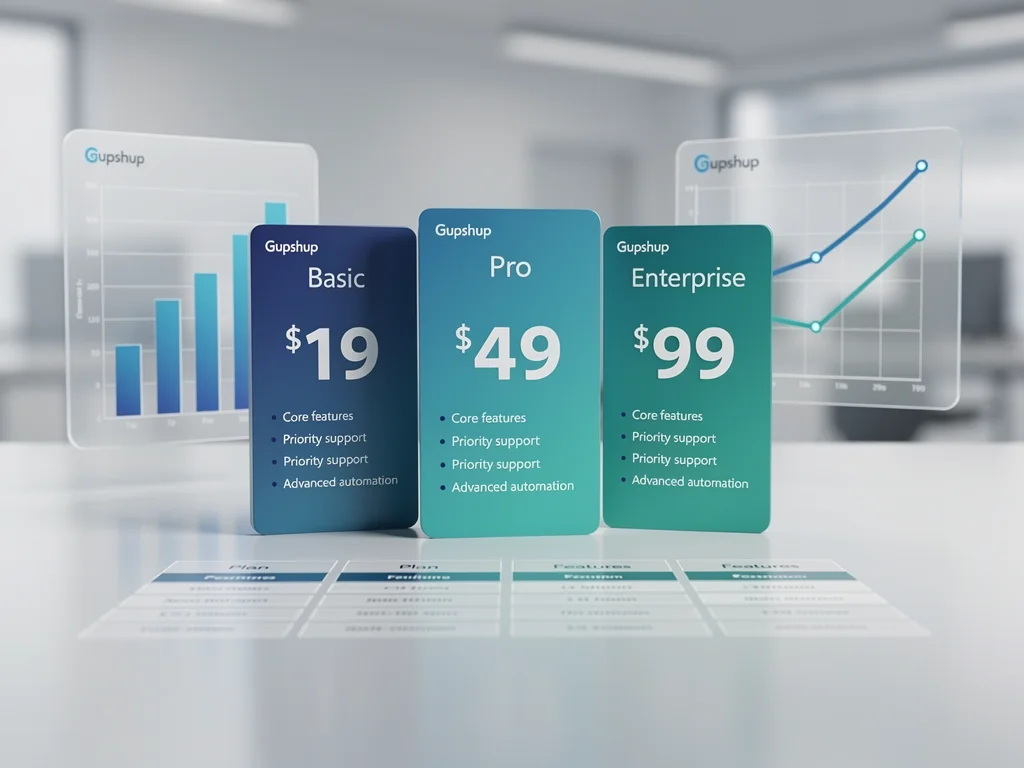
| Plan | Starting Price | Best For |
|---|---|---|
| Free Tier | $0 | Testing & Development |
| Pay-As-You-Go | Variable (per message) | Small to Medium Businesses |
| Enterprise | Contact Sales | Large Organizations |
Free Plan Details
Gupshup offers a limited free tier for developers and testers. Consequently, you receive 100 free WhatsApp conversations monthly and basic API access. Additionally, SMS credits are not included in the free plan. This tier works strictly for proof-of-concept projects, not production environments.
Paid Plans Deep Dive
Pay-As-You-Go (Variable Pricing)
This consumption-based model charges per message sent across different channels:
- WhatsApp: $0.005-$0.09 per conversation (varies by country and category)
- SMS: $0.01-$0.05 per message (region-dependent)
- RCS: $0.01-$0.03 per message
- Voice: $0.02-$0.15 per minute
This plan suits businesses with fluctuating messaging volumes. However, costs can escalate quickly without proper monitoring. No minimum commitment required initially.
Enterprise (Custom Pricing)
Enterprise Gupshup pricing requires direct negotiation with their sales team. Typically, annual contracts start around $50,000-$100,000 based on industry standards. Additionally, volume discounts apply for businesses sending 1M+ messages monthly.
Custom integrations, dedicated support, and SLA guarantees drive costs upward. Consequently, expect implementation fees ranging $5,000-$25,000 for complex deployments. White-labeling options add another 15-30% premium.
Is it worth the money?
The value proposition depends heavily on your messaging volume and channel requirements. For businesses sending 100,000+ messages monthly, Gupshup pricing becomes competitive due to volume discounts. Additionally, the platform’s 30+ channel integrations eliminate multiple vendor relationships.
However, hidden costs exist. Implementation requires developer resources, typically 40-80 hours for basic setups. Furthermore, premium features like advanced analytics and chatbot builders cost extra. Factor in $500-$2,000 monthly for add-ons.
Value Verdict
ROI becomes positive when customer engagement increases by 20%+ through multi-channel messaging. Businesses with strong technical teams extract maximum value. Conversely, non-technical users may struggle with the developer-focused interface, reducing effective ROI.
Compared to Twilio, Gupshup pricing offers better WhatsApp rates but higher SMS costs. Against Vonage, Gupshup provides superior channel diversity at similar price points.
Frequently Asked Questions (FAQ)
1. Does Gupshup offer a free trial?
Yes, the free tier provides 100 WhatsApp conversations monthly indefinitely. Additionally, enterprise prospects can request extended trials with higher limits.
2. Are there any hidden setup fees?
No mandatory setup fees exist for pay-as-you-go plans. However, enterprise implementations typically incur $5,000-$25,000 in professional services charges for custom integrations and training.
3. Can I cancel my subscription anytime?
Pay-as-you-go accounts have no cancellation penalties. Conversely, enterprise contracts usually require 30-90 day notice periods with potential early termination fees.
Conclusion
Gupshup pricing delivers competitive value for high-volume, multi-channel messaging needs. The consumption model provides flexibility, though costs require careful monitoring. Consequently, businesses should pilot with the free tier before committing to enterprise contracts. For comprehensive SaaS pricing comparisons, read more at CloudKitly.