Scoro pricing Guide (2026): Plans, Costs & Value
Executive Summary: Scoro pricing
Understanding Scoro pricing structure is crucial before committing to this comprehensive work management platform. Scoro positions itself as a premium solution, with costs ranging from $26 to $37+ per user monthly when billed annually.
Compared to competitors like Monday.com or Asana, Scoro sits in the higher price bracket. However, it bundles CRM, project management, billing, and reporting into one platform. Consequently, businesses replacing multiple tools may find value despite the premium cost.
Plan Overview
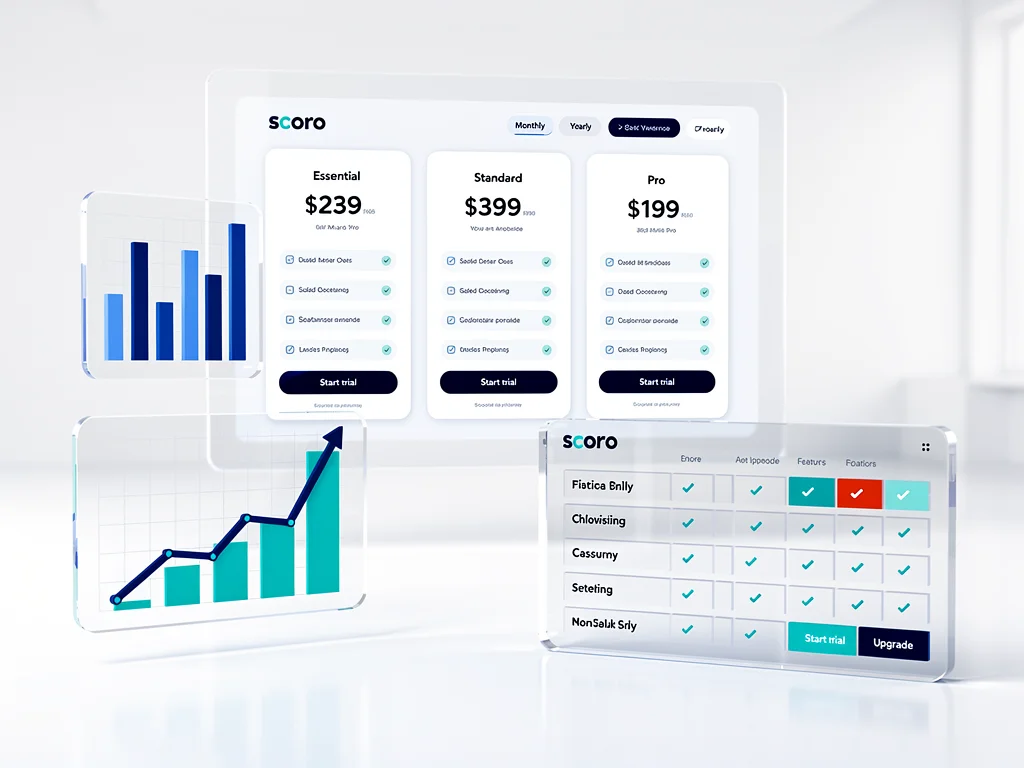
| Plan | Price (Annual) | Price (Monthly) | Best For |
|---|---|---|---|
| Essential | $26/user/month | $33/user/month | Small teams starting out |
| Standard | $37/user/month | $47/user/month | Growing businesses |
| Pro | $63/user/month | $79/user/month | Established companies |
| Ultimate | Contact Sales | Contact Sales | Large enterprises |
Free Plan Details
No free tier available. Scoro does not offer a permanently free plan for any team size. Additionally, there’s no freemium model with limited features. The platform requires paid commitment from day one, though a trial period is available.
Paid Plans Deep Dive
Essential ($26/user/month)
The entry-level plan includes core project management and time tracking capabilities. Features include:
- Task and project management
- Time tracking and calendar
- Contact management (basic CRM)
- Quotes and invoicing
- Real-time reporting dashboard
This plan strictly suits small teams (5-15 people) needing basic workflow organization. However, it lacks advanced integrations and custom fields. Consequently, growing teams quickly outgrow this tier.
Standard ($37/user/month)
The mid-tier option adds collaboration and automation features. Key additions include:
- All Essential features
- Advanced CRM with pipeline management
- Custom fields and workflows
- Budget tracking and forecasting
- Email integration and templates
- API access (limited)
This plan targets businesses with 15-50 employees requiring deeper customization. Additionally, it’s ideal for service-based companies needing robust billing features. Nevertheless, reporting remains somewhat limited compared to Pro.
Pro ($63/user/month)
The professional tier unlocks advanced analytics and resource management. Premium features include:
- All Standard features
- Advanced reporting and custom dashboards
- Resource planning and capacity management
- Financial overview and profitability tracking
- Priority support
- Unlimited API calls
- Advanced permissions and roles
This plan strictly serves established companies (50+ employees) managing complex projects. Moreover, agencies billing multiple clients benefit most from profitability tracking. The price jump is significant but justified for data-driven organizations.
Ultimate (Contact Sales)
Enterprise pricing typically starts around $80-100+ per user monthly based on industry standards. Custom features driving costs include:
- Dedicated account manager
- Custom integrations and API development
- SLA guarantees (99.9% uptime)
- Advanced security (SSO, SAML)
- Onboarding and training packages
- White-label options
Implementation fees typically range $3,000-$15,000 depending on complexity. Additionally, data migration services cost extra. Consequently, expect 6-12 month contracts with volume discounts for 100+ users.
Is it worth the money?
Scoro’s value proposition depends entirely on your current tool stack. If you’re using separate platforms for CRM ($50/user), project management ($25/user), and billing ($30/user), consolidation makes financial sense.
However, teams needing only project management will find Scoro overpriced. The platform shines for professional services firms tracking billable hours and project profitability. Additionally, the learning curve requires 2-4 weeks, impacting initial productivity.
Value Verdict
For agencies and consultancies billing $500K+ annually, ROI typically materializes within 6 months through improved billing accuracy and resource utilization. Consequently, the 15-20% efficiency gains justify the premium cost.
Conversely, startups under 10 people should consider lighter alternatives. The break-even point sits around 15-20 employees where tool consolidation outweighs per-seat costs. Moreover, annual billing saves 21-27% compared to monthly plans.
Frequently Asked Questions (FAQ)
1. Does Scoro offer a free trial?
Yes, Scoro provides a 14-day free trial with full access to features. No credit card is required upfront. However, trials are limited to one per company email domain.
2. Are there any hidden setup fees?
Standard plans include basic onboarding at no extra cost. However, custom implementation, data migration, and advanced training typically cost $2,000-$10,000 based on industry norms. Additionally, premium integrations may require third-party fees.
3. Can I cancel my subscription anytime?
Monthly plans allow cancellation anytime with 30 days notice. Annual contracts typically require fulfillment of the term. Nevertheless, some flexibility exists for downgrades mid-contract with prorated adjustments.
Conclusion
Scoro pricing reflects its positioning as an all-in-one professional services platform rather than a simple project tool. The investment makes sense for service businesses consolidating multiple systems and requiring detailed financial tracking. Consequently, evaluate your current tool costs before deciding. For more software pricing comparisons and reviews, read more at CloudKitly.